Protocols
The pre-departure inspection: twelve areas checked before casting off
A known problem in port is a morning in the workshop. The same problem two hundred miles out is a breakdown, a diversion or worse. Which is why the pre-departure inspection is not a formality: it is the part of a delivery where finding things is cheapest. The scope changes with every boat, but twelve areas are always worth confirming.
Published on
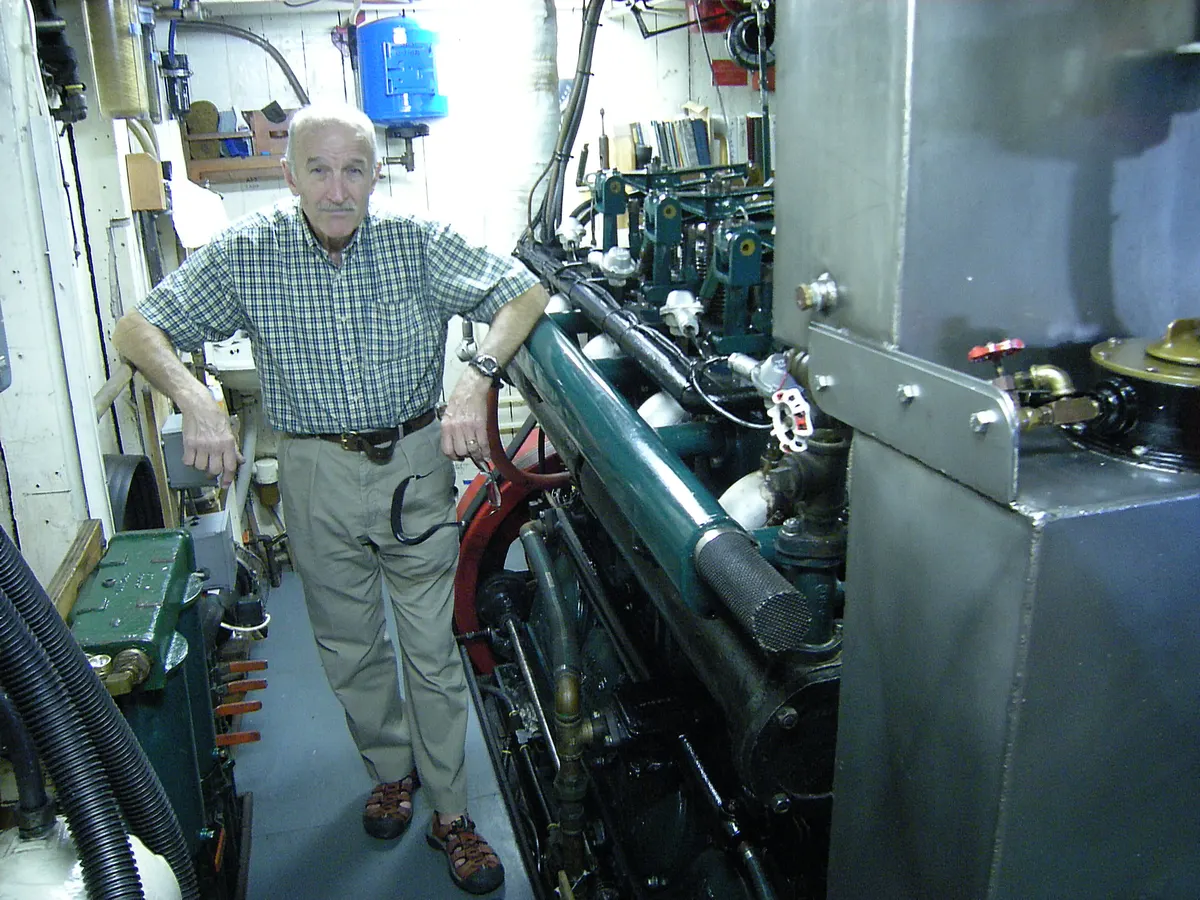
Photo by Joe Mabel · CC BY-SA 3.0
01 · Engines and generator
Real condition of the oil and coolant, not just that the level is between the marks. Leaks in the oil, fuel and raw-water circuits. Belts, tension and pulley condition. Raw-water pump impeller, with a spare aboard. Heat exchangers and a clean sea strainer.
Exhaust, hoses and clips, a point that gets ignored and that on a motor boat can put water or fumes inside the hull. Mounts and alignment if there is new vibration. Temperature and pressure alarms actually tested rather than assumed good. And the same pass over the generator, which on a long passage stops being an extra and becomes the thing keeping the batteries alive.
It is all run under load and for a while, not started for two minutes on the berth.
02 · Fuel and range
Real usable capacity, which is not the brochure figure: some tanks cannot be run dry and consumption rises in a seaway. A realistic burn at the intended cruising speed, measured where possible.
The condition of the fuel and of the bottom of the tank. This is the most repeated failure on passages: a tank with sediment that has sat quietly for years gets stirred by the first swell and chokes every filter at once. A pre-filter with water separator, enough spare elements, and somebody aboard who can change them and bleed the system under way.
And the fuelling plan: where, with what margin, and what happens if that port does not work out. Range is calculated with reserve, never to the limit.
03 · Electrics
Real battery capacity, not battery age. A battery can still turn the engine over having lost half its capacity, and only measuring shows it. Condition of posts, terminals and corrosion. Alternators, chargers and inverters tested under load.
The passage energy budget: what the autopilot, electronics, navigation lights, fridge and communications draw per day, and what puts it back — engine, generator, solar or wind. Plenty of passages get complicated simply because nobody did that sum.
Navigation and emergency lighting, an accessible and labelled panel, and head torches with spare batteries for everyone.
04 · Navigation and communications
Plotter and charts updated for the whole route, not just the departure area. Paper charts or an alternative independent of the main system. AIS transmitting and receiving. Fixed VHF with a sound antenna and at least one charged handheld.
Radar and autopilot tested under way. Depth sounder and log. A compensated compass and somebody able to steer by it if all the electronics go down.
Communications matched to the route: for passages outside coverage, a satellite system and, ideally, a second independent one. We carry a Starlink antenna and a Garmin inReach in parallel, and the reason is not only internet: they are two separate paths for calling help if one fails.
05 · Safety
Equipment required by and suited to the intended navigation, in date: a serviced liferaft sized for the whole crew, lifejackets with harness and light, jackstays on deck, harnesses and tethers, a horseshoe and MOB light, in-date flares, an EPIRB registered to the right name and tested.
Accessible, serviced extinguishers, a fire blanket in the galley, and an alternative escape hatch that genuinely opens from inside. A first aid kit matched to the area and the days at sea, holding what somebody aboard knows how to use.
And the part that is not equipment: everyone knowing where each item is, having put a hand on it before departure.
06 · Bilges and watertight integrity
Electric bilge pumps tested one by one, with their float switches and alarms. At least one manual pump reachable from the helm. Bilges clean and dry, because a dirty bilge masks a new leak and blocks the pumps.
Every skin fitting and seacock operated by hand, one at a time, with its tapered wooden plug lashed alongside. A seacock that has not moved in three years is a seacock that will not close when it has to.
Hatches, ports, inspection covers and seals. Clear scuppers and cockpit drains. And the stern gland or shaft seal, checked and dripping within normal limits.
07 · Steering and emergency gear
Cables, chains, quadrants, rams and hydraulic fluid levels. Play in the rudder stock. And above all the emergency tiller: fitted once alongside, with the tool it needs identified and stowed beside it. Nobody should be looking for that part for the first time in a seaway.
08 · Ground tackle and mooring
Windlass tested under load, not free-running. Main anchor, marked chain and its inboard attachment, arranged so it can be let go quickly if needed. A spare anchor available.
Enough mooring lines in good condition, fenders for ports nobody knows, and long lines ready in case a tow has to be given or taken.
09 · Rig and sails, where fitted
Standing rigging checked point by point: terminals, chainplates, clevis pins, split pins, tension. Running rigging with particular attention to tired halyards and sheets. Furlers run through their full travel.
Sails and their stitching, the genoa’s sun strip, and a clear reefing plan: what is carried in what wind and who does it. Storm canvas aboard and tried at least once, and rigging cutters accessible on deck.
10 · Stowage and closing up
Everything heavy low and lashed. Lockers and doors with catches that survive a hard roll. Nothing loose on deck or in the cockpit. Galley items secured and a clear idea of what happens if she heels forty degrees.
It is a dull area and it is the one that causes most injuries aboard: hardly anyone gets hurt by the sea, they get hurt by what flies across the cabin.
11 · Boat and crew paperwork
The boat’s papers aboard and valid, insurance with the passage confirmed in writing, and clearance where the route requires it. Licences, safety certificates and medicals for every crew member checked before boarding.
And the logbook open from minute one, because what is checked and not written down has, for practical purposes, not been checked.
12 · Provisions, water and rest
Water for the whole passage plus reserve, part of it in containers independent of the tank in case the tank is contaminated. Food that can be prepared in bad weather without real cooking. Holding tank and a plan for it.
Berths usable with the boat heeled, and lee cloths where needed. And rest planned before departure: a crew who arrive off a journey and sail the same day begin already tired, which is the opposite of the point.
What happens when something is not right
It is documented, reported to the owner with photographs, and decided. There are three possible answers: it is fixed before departure, we sail with a limitation that is accepted and written down, or we do not sail.
When the fault compromises the safety of the crew or the integrity of the boat, the only answer is the third, and that decision is not negotiated against a calendar or a budget.
Frequently asked questions
How long does the pre-departure inspection take?
On a well-kept coastal boat, a few hours. On an ocean passage or a boat that has been laid up, one or two full days — and it is worth doing early enough that a spare part can still be ordered if something turns up.
What if the boat is not fit to sail?
We tell you with photographs and a technical explanation of what each point means. If it can be resolved before departure, it is. If it compromises safety and cannot be, we do not sail.
Will you inspect a boat even if someone else does the delivery?
Yes. It is a separate job, and it also makes sense before a season, before a purchase, or before a passage the owner intends to make themselves.
Is a liferaft compulsory?
It depends on the navigation area and the boat’s flag. On offshore passages it is essential regardless of what the paperwork demands, and it has to be serviced, in date and sized for the whole crew.