Protocols
Communications and position reports
An owner who has handed their boat to someone else has every right to know where it is. That is not a whim: it is part of the service, and it is what allows a fast reaction if something goes wrong.
Published on
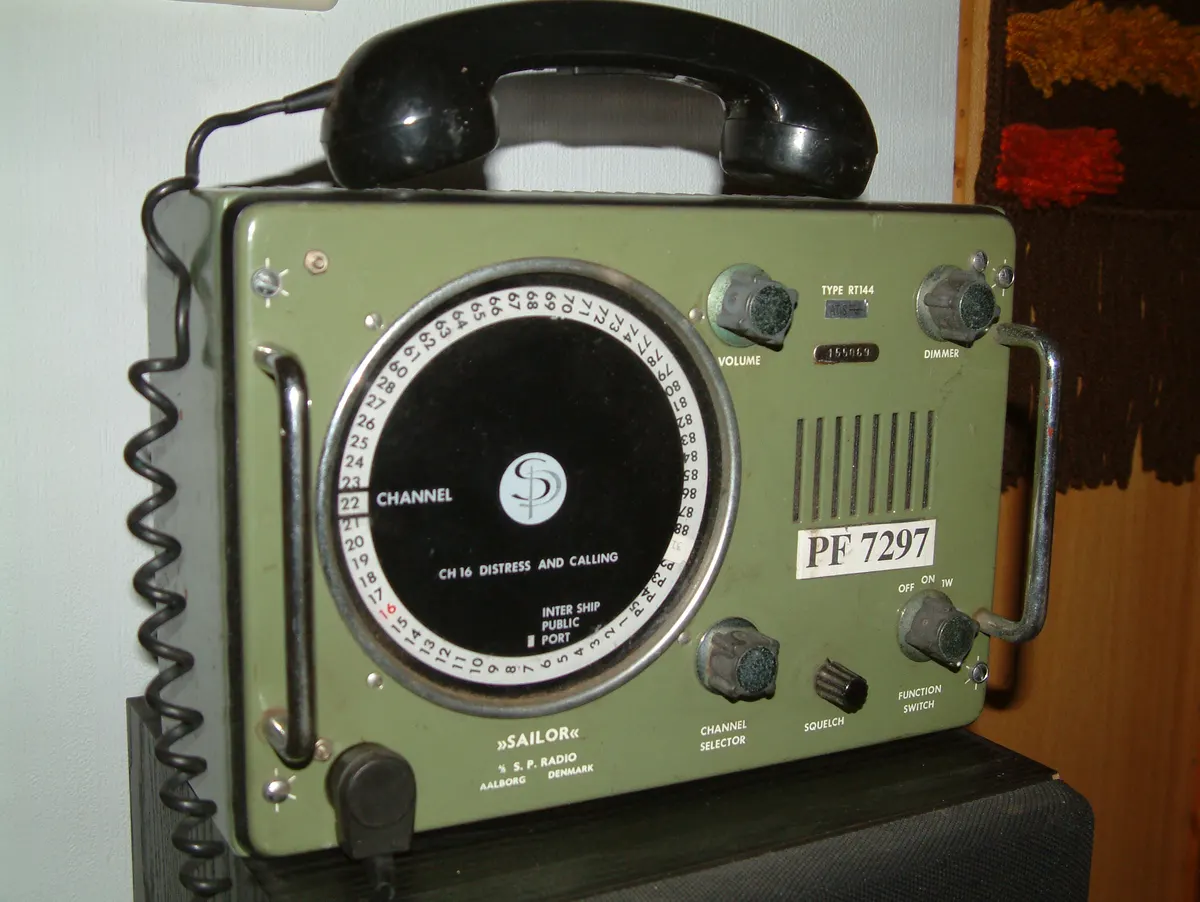
Photo by S.J. de Waard · CC BY 3.0
What we report
A useful report is more than a position. It includes time, position, course and speed, wind and sea conditions, the state of the boat and crew, and the forecast for the coming hours. With that, whoever receives it gets a real sense of how the passage is going.
Frequency is agreed before departure. On short passages, departure, midpoint and arrival is usually enough; on long ones, a daily report at a fixed time, and more if bad weather is expected.
With what
Close to shore a mobile covers most of it, and VHF is the real emergency route, with channel 16 monitored and DSC working. Offshore you need a satellite link: a communicator with messaging and tracking, or a satellite phone on longer passages.
Many owners also appreciate a tracker with a public tracking page: they can watch the boat’s progress without having to ask.
If communication is lost
This is agreed before departure and written down. A cut-off time is set: if no report has arrived by then, a reasonable margin is allowed and the protocol is triggered, starting with attempts on alternative channels and ending, if warranted, with notifying the maritime authorities.
Having that defined avoids two opposite mistakes: raising the alarm over a coverage gap, or letting twenty-four hours pass doing nothing when something really has happened.
The log
Beyond the reports, a passage log is kept on board with hourly entries for position, course, speed, weather and any incidents. It is the basis of the final report handed to the owner with the acceptance record.
Frequently asked questions
How often is the owner updated?
Agreed before departure. Typically a daily report at a fixed time on long passages, and departure, midpoint and arrival on short ones.
What if there is no signal?
The agreed protocol runs: cut-off time, waiting margin, attempts on alternative channels and, if warranted, notifying the maritime authorities.
Can I track the boat live?
Yes, when a tracker with a tracking page is fitted. Many owners prefer it and it is agreed at booking.