Navigation
Fuel, range and stopovers
Running out of fuel mid-passage is one hundred per cent avoidable, and yet it happens. Almost always for the same reason: it was calculated using catalogue consumption and the tank gauge.
Published on
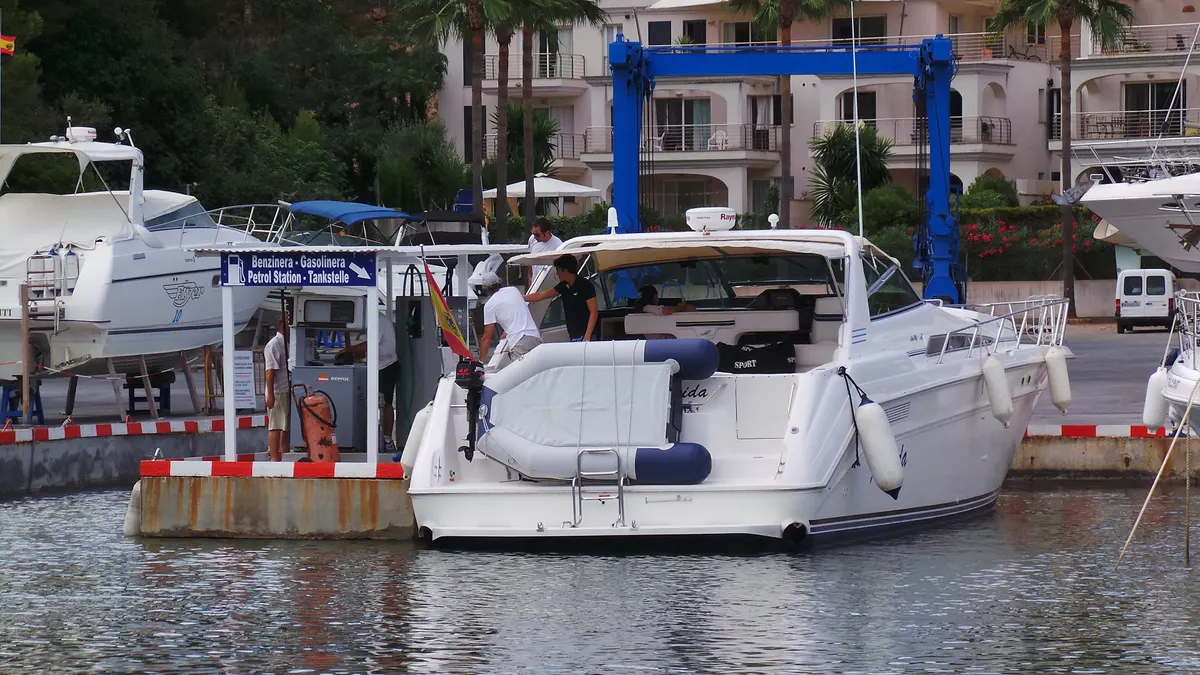
Photo by GR8DAN · CC BY-SA 3.0
Knowing what it burns
Before planning you need real consumption at different cruising speeds. If the boat has no reliable flow meter, it gets measured the old way: fill the tank, run a known leg at constant revs, refill and note litres and hours.
The number that comes out rarely matches the brochure. Hull and propeller condition, load on board and a head sea can push it up easily.
The reserve
A leg is planned on real range minus a safety reserve, which for us never drops below twenty per cent. That reserve is not there to go further: it is there to motor into a headwind if it veers, to divert to an alternative port, or to wait hours for an entrance to open.
And a practical rule: the tank gauge is an indication, not data. What counts is the calculation from engine hours and actual tank capacity.
Speed matters
On a motor vessel, the relationship between speed and consumption is not linear. Dropping a single knot can cut burn noticeably and turn an impossible leg into a comfortable one. On many deliveries the decision is not "how much fuel do I carry" but "how fast do I go".
On a sailing yacht the framing changes: the engine is a limited resource and planning is about how many motoring hours are available for calms and manoeuvring.
The stops
Every refuelling stop gets verified before being relied on: that the station exists and is operating, its real in-season hours, access depth and whether it serves boats of our length. And an alternative is always planned in case it is shut on arrival.
Each stop is also used for everything else: checking levels, filters, water, and resting the crew.
Frequently asked questions
Who pays for fuel on a delivery?
Normally the owner, budgeted separately from the crew fee. Receipts for every refuelling are provided.
How much fuel reserve is kept?
At least twenty per cent of calculated range, and more if the forecast is uncertain or refuge options are far apart.
Do you sail on a sailing yacht delivery?
Whenever conditions allow. It saves fuel and is more comfortable, but the plan always allows enough engine hours for calms and manoeuvring.